




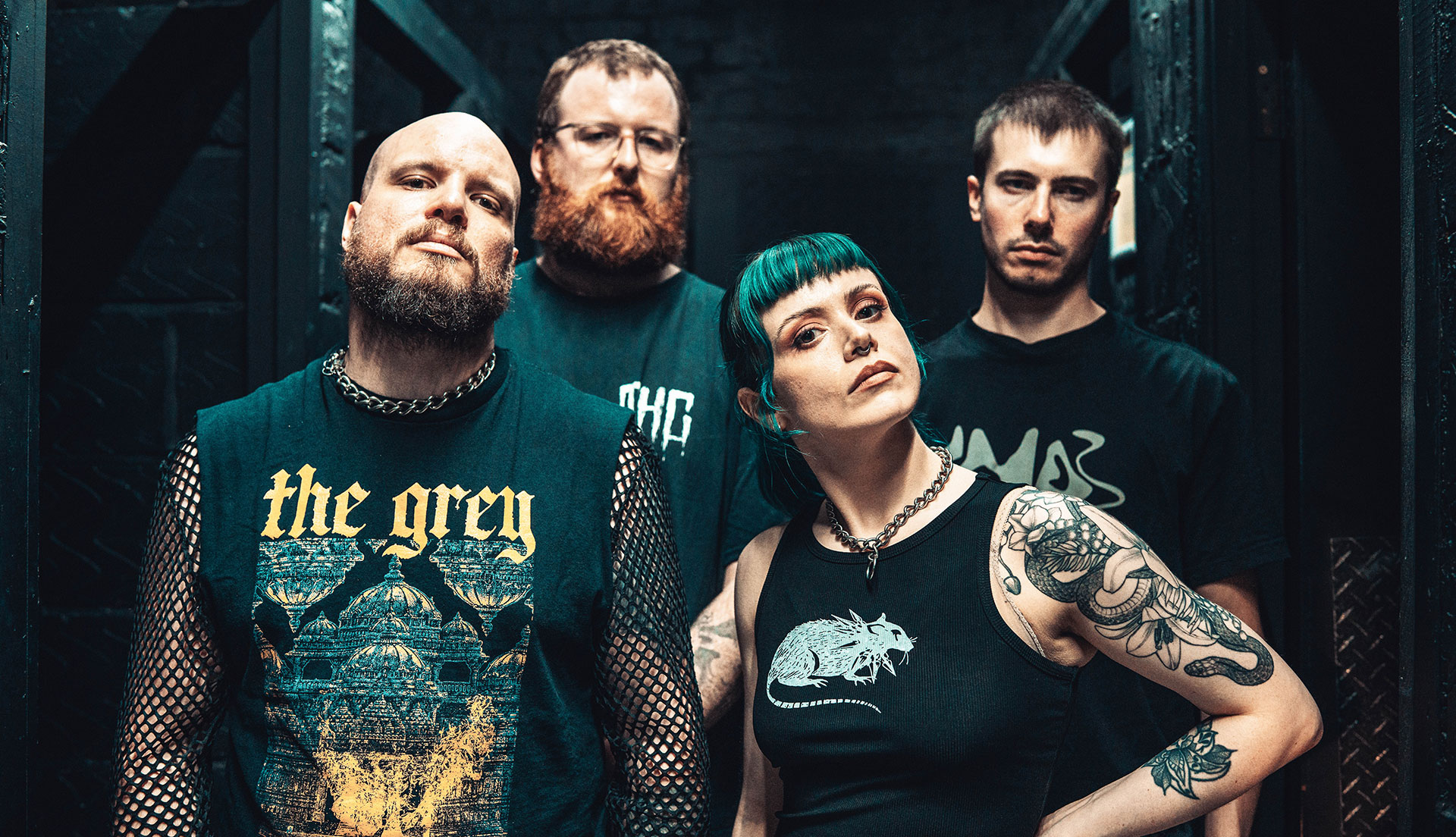
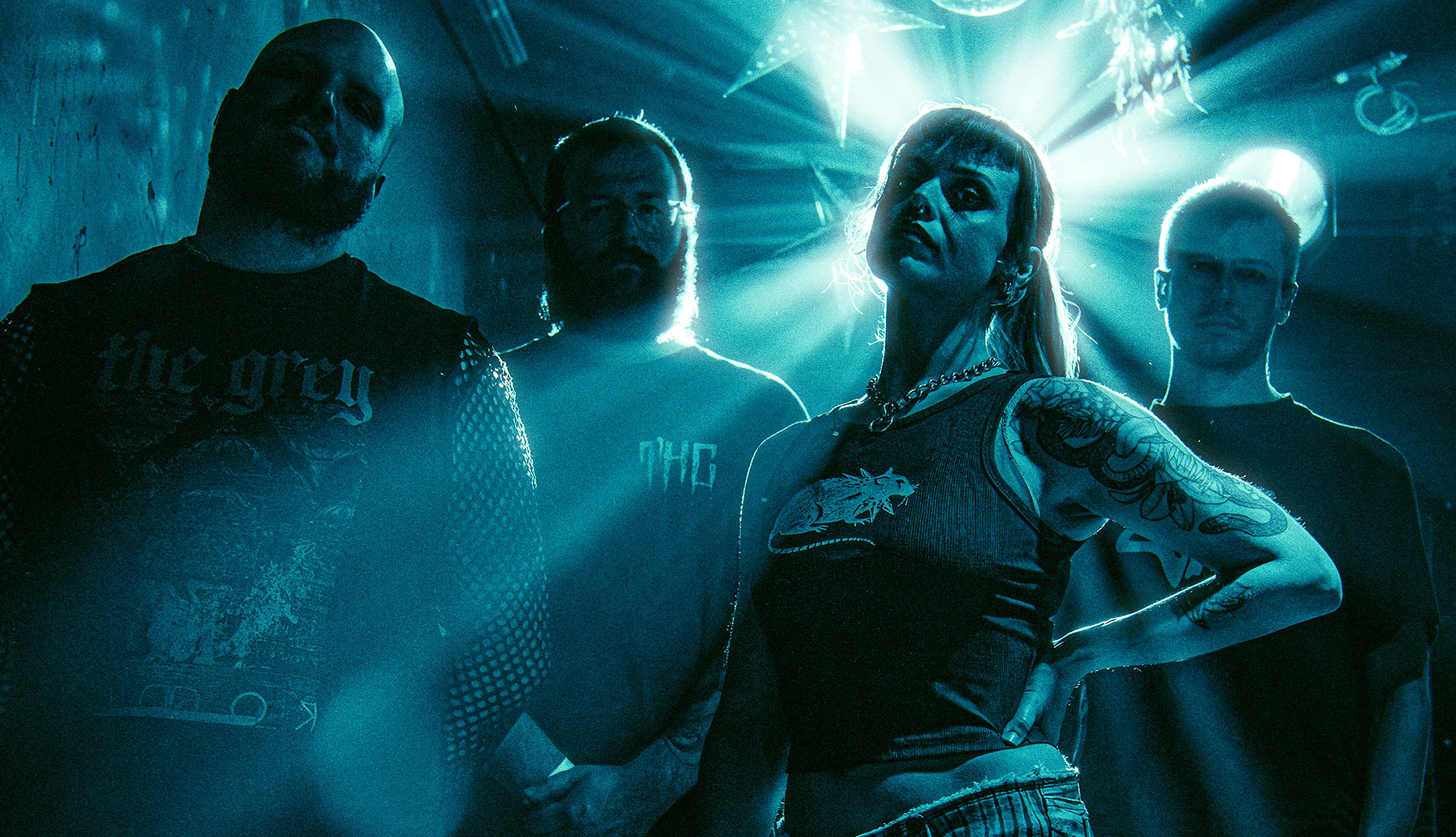
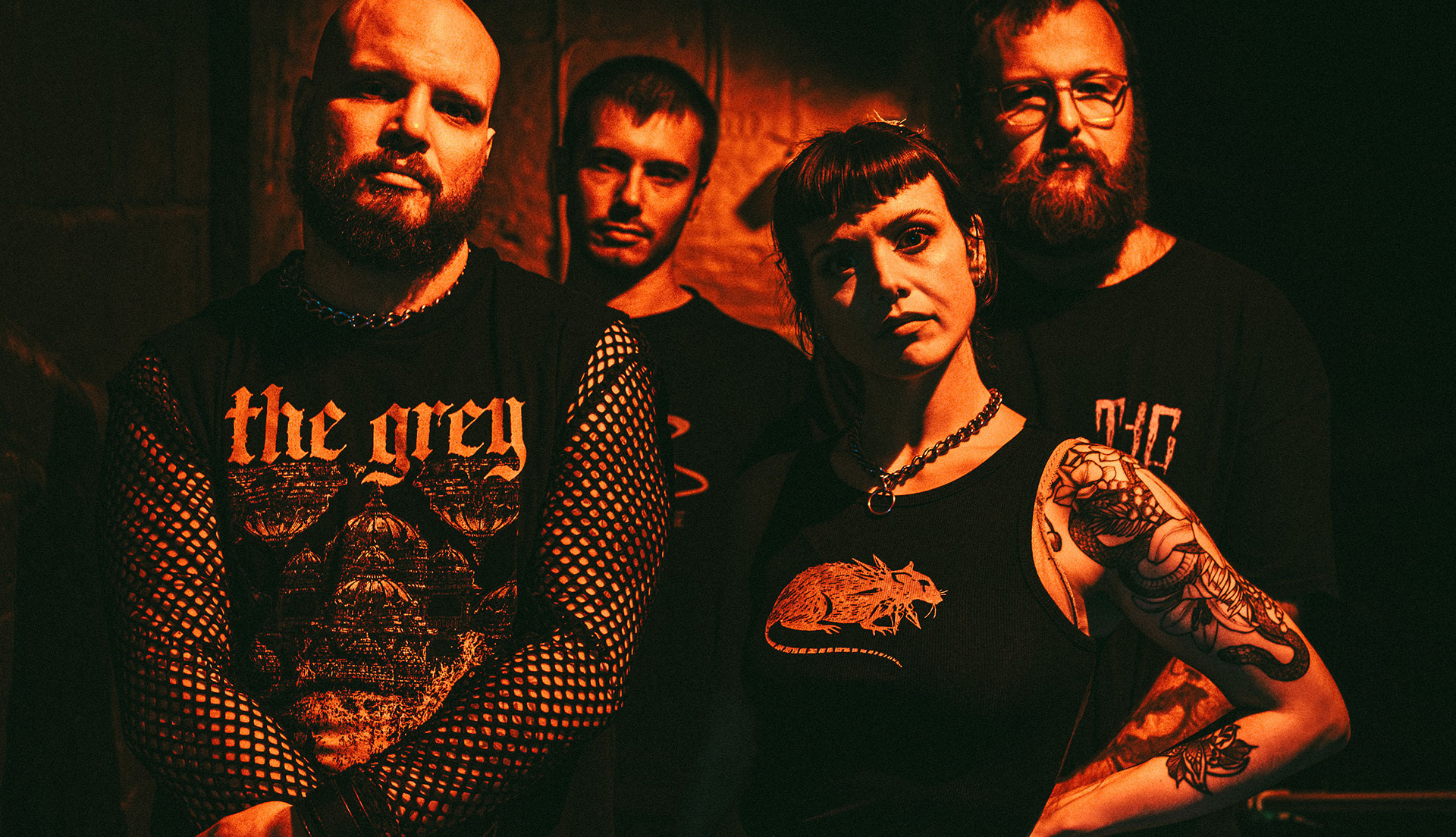
Tribe Of Ghosts – Brighton BIMM alumni band chat exclusively to James Kendall about music, lizard conspiracy theories and how attending the institution shaped their music.
If Tribe Of Ghosts have one defining characteristic aside from their sheer intensity, it’s that they are always pushing things. ‘Post-’ is the term that comes up again and again in our chat with twin-vocalists Adam Sedgwick and Beccy Blaker – ‘post-hardcore’ replacing their previous genre of ‘post-metal’, ‘post-human’ defining the lyrics and the imagery (seriously, rush to YouTube and check out the fantastically overwhelming video to ‘False Gods’. And if you tap into the band’s internal anxiety made musical, you may very much split your life between pre-Tribe Of Ghosts and post-Tribe Of Ghosts. Yeah, they will get right under your skin.
Is world-building – in your songs and your imagery – important to the band?
Adam: Yes. Our original concept from the last album, CITY, was about a dystopian society, which is why we used the ‘dystopian music for a totalitarian world’ tag. We wanted to tell a story that people can connect with now. A lot of the songs on our debut album were rooted in the frustration and anxiety of this modern world.
Beccy: ‘False Gods’ is written from the viewpoint of an elite class that controls the city and is drunk on its own power. I pulled from imagery of conspiracy theories. For example, the lyrics “Dislocate our jaws, swallow the world whole” is a play on the conspiracy of lizard people. It represents the elite class consuming everything mindlessly without thinking of the consequences.
It feels like the songs have moved from being a metaphor for the external world, to being one of the internal. Is that right?
Beccy: The four Open Wounds EP singles are much more internal. Those songs were very personal, allowing us to explore our own emotions through the soundscapes we built in CITY. I feel like I am now exploring how to convey emotion in a post-human way.
Adam: I fully agree with that idea of exploring things in post-human formats. The goal was not to have electronic parts and conventional instruments blend seamlessly. I wanted it to feel like they were violently being slammed together. It was a case of: how can I torture my synthesisers into feeling more like a conventional instrument, and how can I torture conventional instruments to sound more like a synthesiser?
What purpose do the songs’ moments of beauty – like rays of sunlight or diamonds – have in the chaos and ugliness?
Beccy: It’s very important to add light to the shade. It’s part of the layers of emotion that are in our songs – as much as there’s a lot of rage, pain and anguish, there’s also vulnerability. There’s the calm before the storm sonically through those moments too.
Adam: But if it does not feel nasty, it is not right. We understand that we are an ‘ugly’ band, and we are not afraid of being ugly any more. But you cannot have something ugly without the understanding that it is also vulnerable. Within rage, there is sadness. We can’t have one without the other – because, otherwise, you are not being honest about it.
How important is being in Brighton for the band?
Beccy: Brighton gives us this melting pot of influences. I love its adoration of punk and DIY, and that has shaped what the band has become. We have taken that punk ethos into what we do now. There is a beautiful network of bands here, like Knife Bride and Chapters. Brighton audiences gave us that confidence to push things further. The bands here are such a melting pot in different ways, so the influence of everything bleeds in together. No genre ever sounds the same.
What imprint has BIMM had on the band?
Adam: We are all ex-BIMMers; as students, it gave us a place to meet, network and grow. Beccy and I still work there as staff, and I find a perpetuating cycle of inspiration from the students that allows our work to grow and develop. As a tutor now I find that I get a lot of inspiration from the students, seeing what they are bringing to the lessons and thinking, wow, I didn’t think about it that way.
Beccy: The foundations we learnt were to think outside the box and never settle. We have a relentless desire to explore how far we can take things. We believe the limit does not exist; we find a limit, smash it head-on and then realise there are actually several miles left.
www.bimm.ac.uk/brighton / 38–42 Brunswick Street West, Hove BN3 1EL